What Is a Hotel Booking Engine? (And Why Every Hotel Needs One in 2026)
June 22, 2026 • 5 min read
Here's an uncomfortable bit of math. If most of your reservations come through Booking.com, Expedia, and the other big OTAs, you're handing over somewhere between 15% and 30% of each one in commission. Add that up over a year and it's often the biggest line item you never really chose to pay.
A hotel booking engine is how you start taking that money back. And in 2026, with travelers booking everything on their phones at midnight, it's gone from "nice to have" to the thing your whole direct strategy stands on. Let's walk through what it actually is, how it works, and why your property needs one.
So what is a hotel booking engine, really?
A hotel booking engine is the software on your website that lets a guest check availability, see your live rates, and actually book a room, paying you directly, with no middleman taking a cut. It's the "book now" button that turns a curious visitor into a confirmed, commission-free booking.
The easiest way to picture it: it's your own private checkout counter. Instead of sending a ready-to-book guest off to an OTA where you'll owe a commission, the engine captures that reservation on your own site and the payment lands in your account.
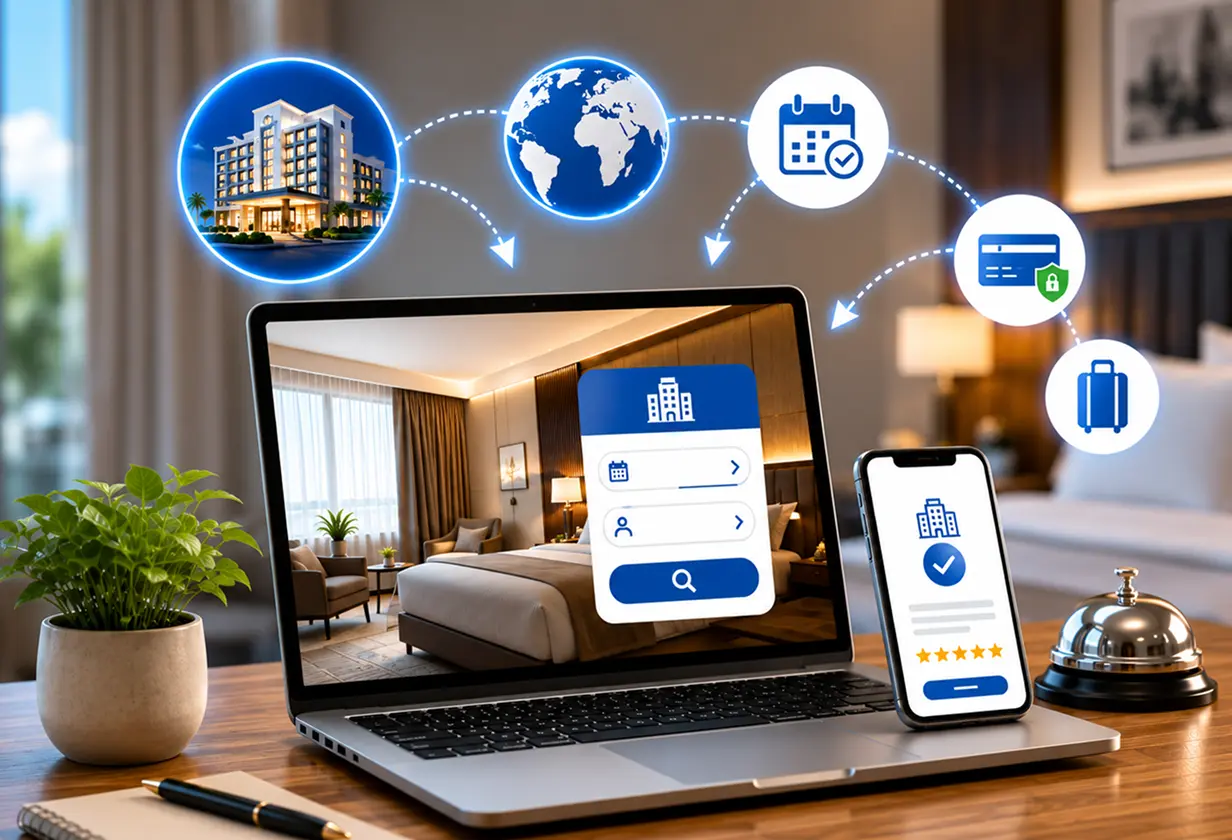
A good online booking engine for hotels runs the whole journey end to end. It shows real-time availability and pricing from your inventory, lets the guest pick dates, room types, rates, and extras, takes the payment securely through a payment gateway, and fires off an instant confirmation to both the guest and your team.
How it works, start to finish
Picture a guest who just found you. Maybe they clicked through from Google, an Instagram post, an email, or a Google Hotel Ads listing. They land on your site and open the booking widget, which shows live availability and rates for the dates they want. They pick a room, add breakfast and an early check-in, and pay, the card processed straight to your account through the payment gateway. A second later they've got a confirmation email, and the reservation has already dropped into your property management system (PMS).
The clever part happens out of sight. The booking engine stays in sync with your channel manager and PMS the whole time, so the same room never gets sold twice across your website, the OTAs, and the front desk.
Booking engine vs. OTA: why the gap matters
Book through an OTA and you typically pay a commission of 15-30% per stay. On a $200 night, that's $30 to $60 gone before you've paid for housekeeping, let alone made a profit.
Send that same guest through your own hotel booking engine and you keep the full rate. You also keep the guest, their email, their preferences, and the chance to win them back next time without paying to acquire them all over again.
None of this means OTAs are the enemy. They're great at putting you in front of travelers who've never heard of your property. The trick is to let OTAs do the discovery and then convert as many of those guests as you can into direct bookings on your own site. We'll dig into exactly how next week.
Why this isn't optional anymore in 2026
Commissions quietly compound. Every OTA reservation is a recurring tax on revenue you already earned, while a direct booking engine costs you a fraction of that once it's set up. Meanwhile travelers expect to book online in seconds, and a hotel without a proper hotel reservation system simply loses those people to the competitor who made it easy.
There's also the data. Direct bookings hand you the guest's details, which means repeat stays, upsells, and loyalty, none of which an OTA will ever share. And your booking engine is the destination everything else points to: Google Hotel Ads, metasearch, email, social. All that marketing only turns into money if there's somewhere to actually complete the booking.
The best part for independents is that this used to be chain-only technology, and now it isn't. A modern commission-free booking engine is built for properties your size, which makes it less of a luxury and more of a baseline.
What to look for when you choose one
A few things separate a booking engine that earns its keep from one that just sits there. Look for commission-free or flat pricing, so you keep what you earn instead of paying per booking. Insist on a mobile-first, genuinely fast checkout, because most guests are on a phone and a clunky flow loses them. Make sure it offers real-time sync with your PMS and channel manager to prevent overbookings, and that it connects to Google Hotel Ads and metasearch so you can fight for high-intent traffic.
Beyond that, the details add up: secure, PCI-compliant payment gateway support, built-in upsells and promo codes to lift your average booking value, and a clean, branded design that looks like your hotel, not some generic third party, at the exact moment a guest is about to pay.
Where Hotellifyr fits
Hotellifyr is an all-in-one booking and management platform made for independent hotels and resorts that want to grow direct bookings and stop bleeding revenue to OTA commissions. Its hotel booking engine drops into your website, syncs with your PMS and channel manager, and connects to Google Hotel Ads, so the bookings you worked hard to earn actually end up with you.
Frequently Asked Questions
What is a hotel booking engine?
A hotel booking engine is software on a hotel's website that lets guests check live availability, view rates, and complete a reservation directly-without going through an online travel agency (OTA) and paying commission.
How is a booking engine different from an OTA?
An OTA like Booking.com or Expedia lists your hotel and charges a commission (typically 15-30%) on each reservation. A booking engine captures the reservation on your own website, so you keep the full rate and own the guest relationship.
Do small or independent hotels need a booking engine?
Yes. Modern commission-free booking engines are designed for independent hotels and resorts. They let smaller properties compete with chains by capturing direct, profitable bookings instead of relying solely on OTAs.
Does a booking engine work with my PMS and channel manager?
A good booking engine syncs in real time with your property management system (PMS) and channel manager, so availability stays accurate across your website and all OTA channels and rooms are never double-sold.
How much does a hotel booking engine cost?
Pricing varies by provider-some charge a per-booking commission, while platforms like Hotellifyr offer commission-free or flat-rate models so your costs don't scale with your success.